




Seguin City Council members move towards adoption of city’s new comprehensive plan
(Seguin) — The Seguin City Council has given a thumbs up to a new plan that maps out the city’s future for the next 20 to 30 years. The city has been working on a new comprehensive plan. The plan spells out the vision for the city’s future, establishes guiding principles that will help it to get there, and then looks at several other necessary steps to make sure that the city has the tools, the policies and the practices in place to achieve those goals.
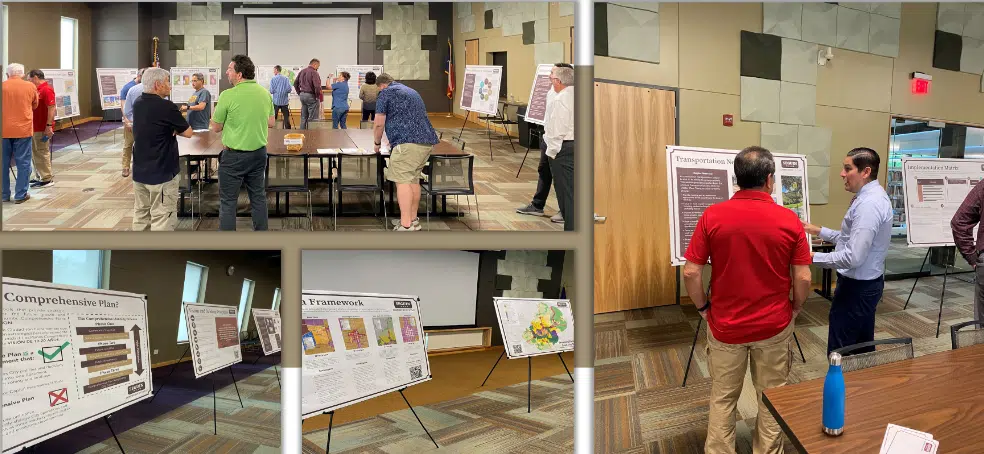
The city hired the San Marcos-based firm Freese and Nichols to help develop the updated comprehensive plan. Project Manager Chance Sparks, an urban planner at Freese and Nichols, says this process has taken more than a year to complete, and it included a number of interactions with the community. Sparks says this includes a recent meeting that it held to allow the community to preview a draft copy of the proposed plan.
“We’re seeing a lot of great feedback. Lots of comments about focusing on growth and change in different areas of the city. We’ve heard a lot of positive language. It’s very action oriented, with lots of action words within goal statements, objectives, and things like that. A lot of input on what you heard (City Manager Steve) Parker referred to earlier, with an emphasis on quality-of-life issues. We saw that emerge again within the comprehensive plan effort overall. So, there was nothing that really surprised us in that process, which is good. You don’t want surprises at the end of the planning process. That’s not a good sign,” said Sparks.
The comprehensive plan looks at every aspect of life in Seguin. Sparks says the plan is designed so that anyone can look at it and clearly see the plans and goals laid out within the new plan.
“So, here’s your comprehensive plan breakdown. There’s really two chapters of this that are kind of setting the stage. It’s your snapshot and your vision and guiding principles. From there, you have four that we call content-based chapters that are focused on key topical areas, and then there’s an implementation chapter. It’s literally the how to go and implement this plan as you go forward,” said Sparks.
The vision for the plan is for Seguin to grow in a smart way, while maintaining and enhancing its small town charms. It also establishes some guidelines that help to inform the decisions that the city will make in the future. The idea is to make sure that future decisions are aligned with the goals and strategies included in the comprehensive plan.
“Your vision statement is just a capture of what are you? When you jump into that time machine and leap 10, 20 years into the future, what’s a statement that captures what Seguin is at that point. The guiding principles sort of serve as a moral compass for a plan. They tell you what to do when you encounter the unexpected. The example we often use for that is if you were talking about Tesla 20 years ago, it was a somewhat obscure electrical inventor. Tesla today is a major car company — two different things. So, making sure that you have the tools in place to deal with the unexpected when it happens. These also serve as kind of a framework for all of the action items that we recommend. We kind of believe that no action item is married to a single guiding principle. One action can be trying to do multiple things. So that is something that carries throughout the plan,” said Sparks.
This is not a plan that’s designed to sit on a shelf and gather dust. Sparks says it should be actively used as the city move foward over the next few decades. He says the plan is meant to be used on a regular basis by all Seguin stakeholders.
“This was set up thinking about the user in mind. Both the developer user, the staff user, users in terms of your boards and commissions, and your City Council. This includes your land use map, of course, and your population and growth projections, which were informed by your recent utility planning efforts. It all connects. So when we talk about these dashboards, though, what’s really important about them is their compatibility matrix. It literally lays out about a dozen different types of development and the level of consistency with that land use category. But what’s really important about that is those ones that are somewhere in between a one and a five — where it’s they are sometimes okay. We include commentary on what are the circumstances when that type of development is appropriate or the things you want to think about if you’re looking at a specific use permit or something like that. We also have a neighborhood and urban design element to this. It’s really looking at how you kind of tell your story as a city. You’ll find in this discussion different urban design, different gateway treatments, (and) how do you convey the quality of your city. We know it’s a high quality city. How do you tell others about that,” said Sparks.
Helping to tell the city’s story is a key component to the comprehensiuve plan. It’s not just about marketing parts of the city, but instead it lays out strategies that allow the city to highlight and enhance some important parts of the town — that are clearly assets — but that might have been overlooked in past years. One way to do that is use something that Sparks called “small area planning” efforts. These are ways to strategically look at certain areas and to come up with policies that help to develop and enhance them. This includes areas along highways in Seguin, as well as some targeted areas within key parts of the city.
“This is something that is new and different for you all. The downtown (master) plan is an example of a small area planning effort. We’re actually suggesting a few other areas of your city that are great candidates for this. Some of these are corridors. Your (Highway) 123 and (Highway) 46 corridors, where you’re experiencing a lot of this growth pressure and it has some unique issues. It’s also thinking about areas like (Highway) 130, where it might be right for industrial development, but you’ve got to solve that infrastructure challenge out there to make it work,” said Sparks.
Sparks says they also need to use small area planning efforts to look at areas, like a newly proposed Depot District. He says the Depot District is the name that they are giving to an area near the railroad tracks on North Austin Street.
“This is kind of your second downtown. It is up around that Kingsbury and Austin Street intersection going up towards the railroad. It kind of has that same kind of downtown built form. It’s an opportunity to create two different personalities. You can have one that’s more of an entertainment district, one that is more pure historic, (and) some mixture of both. So it gives you a lot of opportunities there to really think about how you tell your story, said Sparks.
Sparks says when it comes to telling the city’s story, the comprehensive plan also suggests using a small area planning effort to focus on an historic neighborhood on the city’s west side.
“You have an historic area of your city that I’m not sure a lot of people are really aware of, in terms of it’s really, really colorful and vibrant history. You have Guadalupe Street that had its own economic engine and things like that. It is a story to be told and something you can celebrate through small area planning efforts and resulting changes from that. It’s an area where you can use some infrastructure investment in that area, of course, but you see that that can’t pay off — projects like Park West show that. So it’s taking that to the next level as you go forward,” said Sparks.
The comprehensive plan also lays out the best practices for the city when it comes to economic development. The city, for years, has done a good job creating and maintaining manufacturing jobs in Seguin. It recently has also seen a boost in housing and retail growth in the community. Sparks says the comprehensive plan looks at all of those components and helps the city move towards many of the additional things that people said they wanted to see developed for Seguin’s future.
“This is about how do you bring the market to your vision? What are the tools that are necessary? What’s your context? How do you position yourself for success? This is about how do you align those jobs you’re seeking to the skills people have. So that way as you grow, you know, as housing costs go up, things like salaries are keeping up with that. That is something that you all have going for you right now that other cities in this region don’t. Your housing-to-income (ratio) is not broken like some cities. So this is an opportunity to get ahead of that issue,” said Sparks.
The real power of the comprehensive plan may be that it takes a holistic approach to moving the city forward. Sparks says it’s important to recognize the connections that exist within the plan, and to make sure the city is maximizing those opportunities to improve Seguin.
“So many things in different areas, whether it’s stormwater, whether it’s parks, whether it’s waste water, have shared needs and you can solve multiple problems with single investments. So that’s one of the key themes out of this. The other is a one-water approach. This is recognizing that water is a water-cycle and it changes and it morphs through each stage of it, and has different impacts on our community. When you take that into consideration and do holistic planning, you get a lot better results. You’re already taking some steps with things like a drainage criteria manual and stuff like that. (But it’s also) thinking about when you’re building out your linear park system and trail connectivity and following those creeks — and how can you make those great spaces along the creekway and also get resilient stormwater infrastructure,” said Sparks.
Sparks says this plan gives the city a vision for the future and a road map to get there. He says does that by giving city officials what they need to plan for the future, but also enough flexibility to react to other changes that might come the city’s way.
“One of things that sometimes hear planners say, and even people say, is ‘I wish the city was more proactive.’ You’ve heard that at some point. I’m going to tell you that you have to be both. You have to be proactive and you have to be reactive. There’s a time and a place for each, and that is how our implementation chapter is set up, so that you’ve got tools in both of those types of categories. Because things like, you know, a rezoning, that’s a reactive process. But creating your development regulations, that’s proactive. (Sometimes) they go together. So this doesn’t (just) include best practices, (but also) how to make decisions, economic strategies and financing strategies because math is real and it’s relentless. It also includes an implementation table that literally lays out chapter and verse what you need to be doing, and who should be leading those conversations,” said Sparks.
The last part of the plan gives the city and the community ways that they can measure what’s being done. This comprehensive plan is an action plan for the city’s future, and he says everyone needs to be able to see how the plan is working for the betterment of the city.
“There’s kind of saying in the city world that cities tend to only do what they measure. And so you want to give yourself ways to measure your success. It’s also really important for accountability to the public. You just doing a lot of time listening to them, and that shouldn’t end. Now you’ve got to flip that around and say ‘we listened to you and here’s how we’re doing it and here are the results.’ That’s how you build a lot of public trust and continued public trust going forward. That is how this is structured,” said Sparks.
Sparks made his presentation on the plan during last Tuesday’s city council meeting. The council voted unanimously to approve the plan on first reading. A second and final reading of the ordinance, as well as a public hearing on the comprehensive plan, will be held during the council’s meeting slated for the third week in July. Seguin Mayor Donna Dodgen says they want to make sure that the community has plenty of time to review the plan before it is formally adopted at that July meeting.
You can hear Sparks’ full presentation on the comprehensive plan during radio station KWED’s Saturday Topic program this weekend. The program airs at 8:30 a.m. Saturday here on AM 1580 KWED, and live online at seguintoday.com. You can also read the entire comprehensive plan by going here.

-
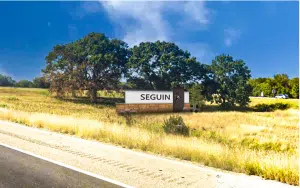
- The plan suggests that more be done to provide features and signage that help to tell Seguin’s story.
-
- The city used a Community Open House format to get more input on its proposed Comprehensive Plan.