




Why Some Grass Will Be Growing Taller Along City’s Popular Hike & Bike Trail
(Seguin) — If you’ve noticed some of the grass getting taller along the Walnut Branch Hike & Bike Trail, it’s not your imagination. The City of Seguin recently announced that it has been directed by the U.S. Army Corps of Engineers to allow some of that vegetation to grow taller.
City Engineer Melissa Reynolds says Army Corps officials first reached out last summer with concerns that some locations along the creek were being trimmed too short.
“We received a letter back in May of last year, actually, and it was a pretty direct letter giving us direction about the specifics of what they define as maintenance and what isn’t allowed,” said Reynolds.
The city had been trimming those areas as part of its regular maintenance work along the creek. Those areas include projects that were completed by the Corps years ago and later turned over to the city for upkeep.
“And what’s basically happened along Walnut Branch, in various areas, is Army Corps previously, starting back in the ‘80s, had various projects from channelization to wetland creation to reforestation areas, all done by different branches of the Army Corps. Those areas have all been turned over to the city for maintenance, which was done decades ago. What has not happened quite the way Army Corps would have liked to have seen is the protection of those reforestation areas and wetland areas. Our parks department has mowed and maintained those like they would most parks. So they’ve used standard mowers and they’ve cut the grass pretty short. But when you’re talking about ecosystems and things with aquatic vegetation, that type of trimming is not conducive to those habitat reforestation areas. And so, that’s caused some bank erosion and it’s caused some damage to the stream,” said Reynolds.
The change means some of the vegetation will be much higher in areas along the creek. Parks Director Jack Jones says people will notice the change, particularly along some busy stretches of the hike and bike trail.
“It won’t be as manicured as it was, but at least there won’t be giant ragweed and milkweed that really just blocks your view of the creek,” said Jones.
Jones says people will also notice changes along the Austin Street bridge and in areas that stretch into the east side of Max Starcke Park. He says it could impact activities like cross-country meets, where routes may need to be adjusted. Jones also says there may be noticeable changes along one portion of the Starcke Park Disc Golf Course.
“There’s a whole bunch of trees there, and we have a disc golf hole — disc golf hole nine — so we may push the basket over here. Now, if a disc goes in there, so be it. It’s like a golf course, right? You get your golf ball. But like a golf course, we’re probably going to have to put up a non-mowing area,” said Jones.
There is no real reason for alarm, but people should expect things to look different along some stretches of the creek. Reynolds says the changes are all part of an effort to protect those areas.
“Expect it to look a little different. The grass is going to get a little bit taller. We want natural vegetation to grow in these areas. Natural vegetation has really good root systems, and those root systems help stabilize the creek, which is why we’re seeing some of the undermining in some of the areas near the library, for instance, because of damage to some of those aquatic areas and vegetation,” said Reynolds.
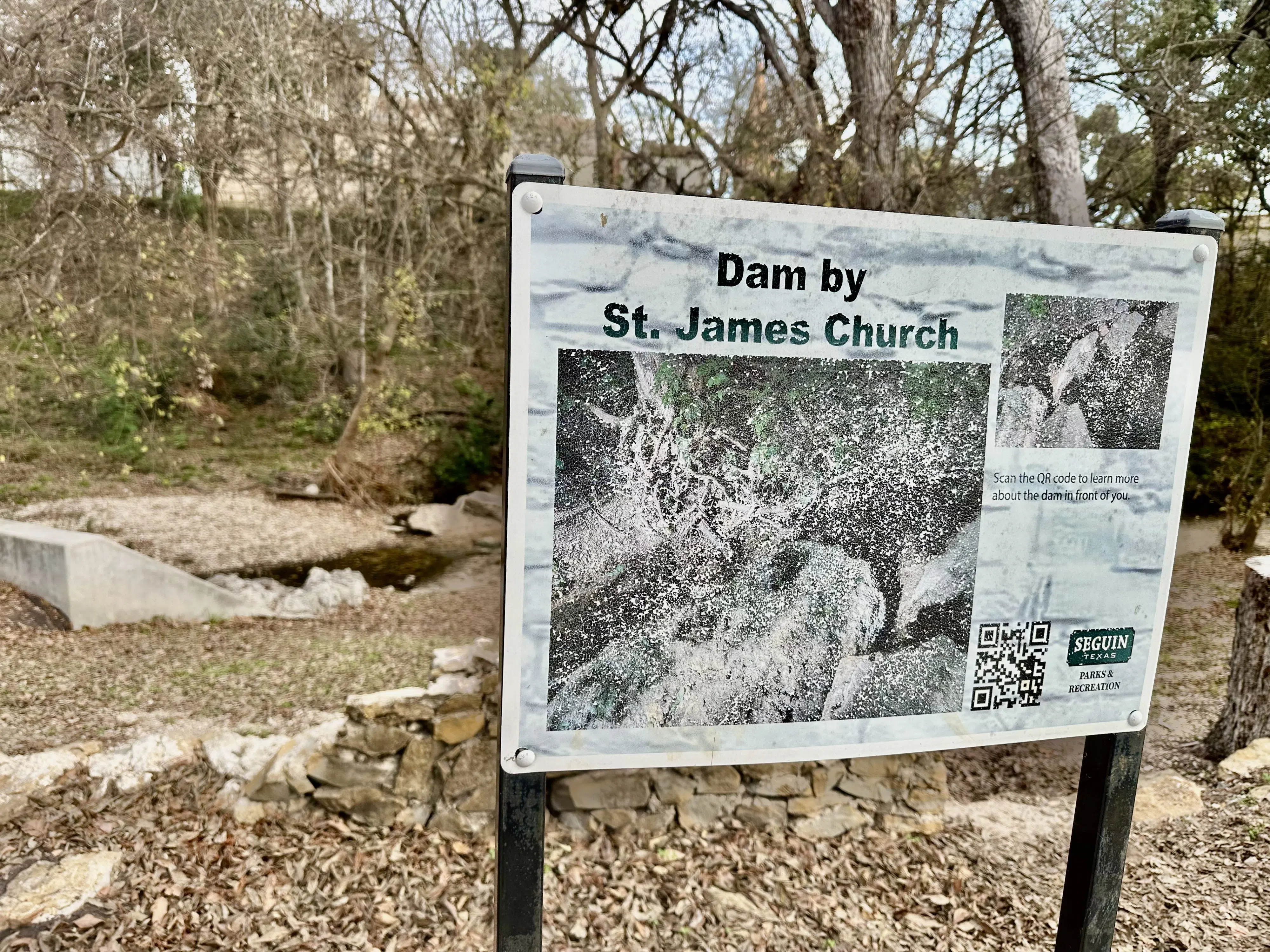
The city will soon be putting up signs to help identify reforestation areas and designated grow zones. Reynolds says the goal is to help educate the public about why the changes are being made.
“We want to put in these educational signs so people understand that these are environmental areas. We’re not not maintaining it — we’re just allowing it to be more natural in areas where it’s environmentally sensitive,” said Reynolds.
The vegetation will be taller, but that does not mean the city’s maintenance work will stop.
“We will be maintaining the walkways, but only for about a buffer area five feet from the trail to keep some of the nuisance critters — the snakes and things like that — away from areas where we’re going to be seeing a lot more pedestrians and bikers. But outside of that five-foot buffer, we’re supposed to keep it as natural as possible, and you’ll see those signs go in for that,” said Reynolds.
Reynolds says the city worked closely with the Corps to ensure it understands and meets the maintenance requirements for those areas.
“We’ve been maintaining it one way, and when you find out that you’re doing it wrong, you’ve got to fix it. It’s a know-better, do-better kind of situation. And we want the community to be aware of that before we get too far into this and start getting complaints,” said Reynolds.
Copies of the city’s full presentation on the reforestation areas and grow zones can be accessed by clicking this link:
The presentation is also available on the Seguin Today website.


