




(Seguin) — With the Texas Education Agency’s 2025 A–F accountability ratings now public, the focus has shifted from the letter grades themselves to what it all means for the Seguin ISD. The A–F Accountability System was established in 2017 by the Texas Legislature through House Bill 22. Ratings are based on three areas: Student Achievement, School Progress, and Closing the Gaps.
Last week, the Seguin Daily News reported that Seguin ISD received a districtwide letter grade of D, reflecting uneven performances across its campuses.
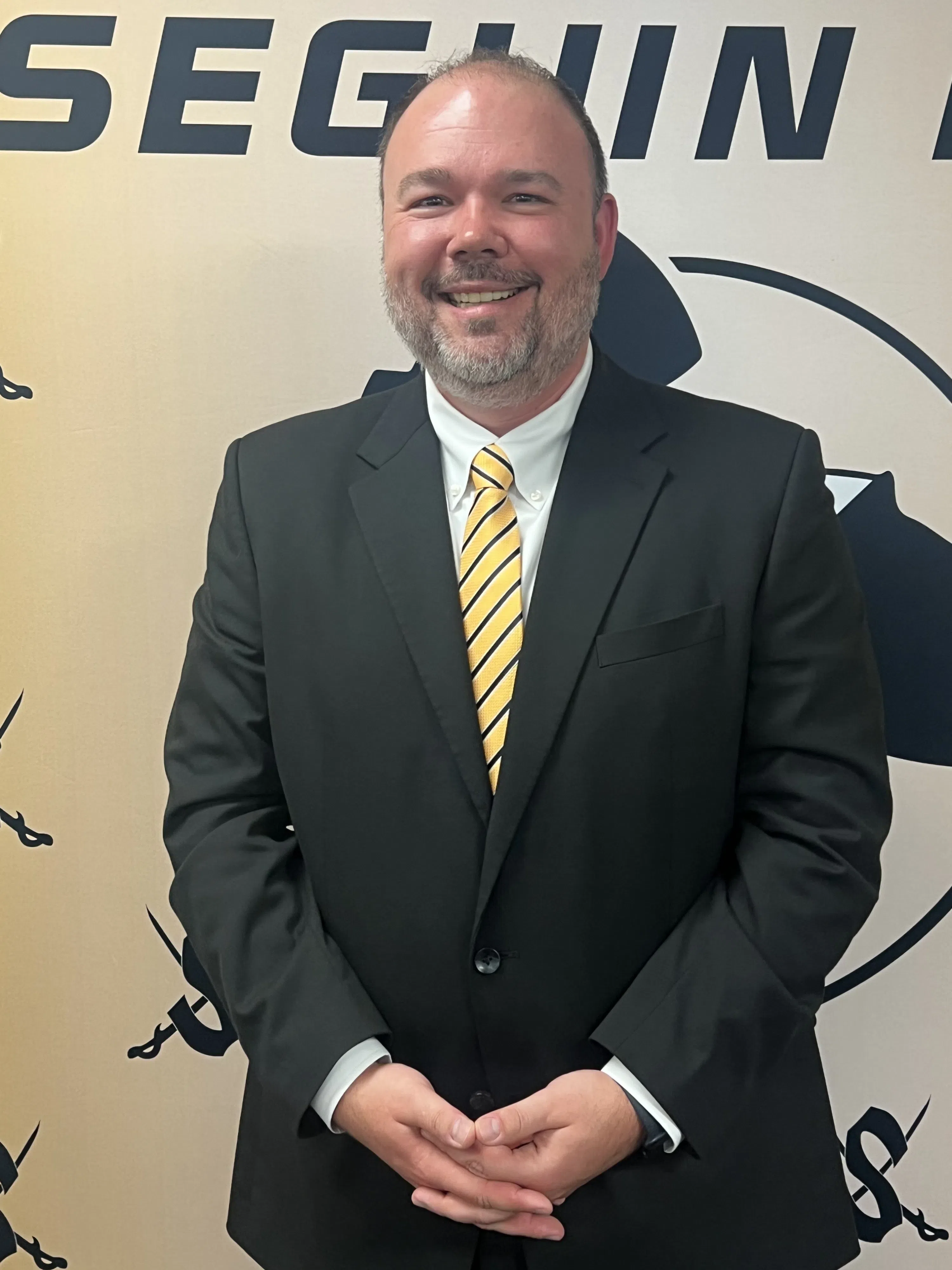
This week, the Seguin Daily News spoke with Seguin ISD Superintendent Jack Lee, who is beginning his first school year with the district. Dr. Lee says while the scores are not where the district wants them to be, he reminds the community that the ratings provide an opportunity to reflect and chart a stronger course forward.
“Accountability is just that. It’s the state’s way of determining a one-time high stakes test that students have to take third grade all the way through high school and determine how they believe a school is performing overall. I’m quick to say that it is a high stakes test because it is. It’s a one-time shot. It’s that one test that happens in the spring and every bit of data is determined off of that one time, one single shot test that occurs. Now accountability, I’ll be the first to admit that as superintendent, I am not afraid of accountability. In fact, I welcome accountability in ratings. That is one way for communities to see how they believe, the state believes that their school is functioning. It just doesn’t tell the whole story,” said Dr. Lee.
Dr. Lee says among the most promising snapshots of the district’s work were at the elementary level, including the Ball Early Childhood Center. He points to encouraging signs where several campuses showed meaningful growth.
“Out of 7 elementary schools, we had five elementary schools overall that saw an increase in their overall accountability. Jefferson Avenue Elementary who jumped from a 52 which was an F up to an 84 – B overall. Their increase there is very much attributed to academic growth – the name of the game of getting your students to grow from where they were last year in that high stakes test to where they are at the current year when they took that. So, we saw a significant jump there at Jefferson because of that academic growth. Koennecke also saw a fairly substantial increase. They went from a 69 – a D overall to an 81. They also saw a fairly significant increase in closing the gaps. That particular domain – domain 3 of the accountability system which is very much based on reading and math and whether students are hitting the Meets – not just the Approaches but if they are hitting Meets or above. For McQueeney, they jumped from a C – a 76 up to an 80. Vogel jumped from a 60 -D – all the way up to a 79 – a C. They were very close to that B. Again, academic growth, closing the gaps is that area where they saw some significant increases and then at Weinert, we saw a jump from 61 to a 76. Theirs was attributed more to student achievement rather than growth,” said Dr. Lee.
Dr. Lee says the two remaining elementary schools, however, reported a decline.
“We had two elementary schools where saw a decline in their scores. Rodriguez and Patlan — they saw a little bit of a decline in the work that they had going on there. Some of that was related to student achievement – just how well students did overall on that STAAR test and then some on academic growth as part of that work. It just tells us that we have some work to do on those campuses,” said Dr. Lee
Meanwhile, Dr. Lee acknowledged the greatest challenges remain at the secondary level where Jim Barnes Middle School was rated an F; A.J. Briesemeister earned a C and where Seguin High School, the district’s largest campus, received a D.
“AJB, Breezy, we saw an increase from a 66 – a D – up to a 76. Theirs was not necessarily student growth as much as it was the student achievement –overall STAAR scores and then closing the gaps — that Meets level for reading and math specifically. Barnes, we saw a decline in. They went from a 60 –D – down to a 55 which is an F. It’s the only campus in the district that scored an F. Theirs, the decline, was primarily related to student achievement more than anything else and then we saw a little bit of a decline at the high school. They went from a 69 as a D to a 64 as a D. Theirs was really more related towards closing the gaps. We saw a decline in students that hit Meets. Theirs includes a little bit more — an accountability than other campuses because they have the CCMR component – College, Career, Military Readineses. That data is always lacking data. It’s going to be two years behind. The state has a tendency to change some of those requirements on us after the fact. It’s like a football game. Changing in the middle of the game – 3rd quarter, you suddenly change the rules. They have done that a couple of times. I don’t say that as an excuse because we’ve got to play the game like anyone else and be smart and we want to provide the absolute best for our students,” said Dr. Lee.
Also, while no other campus in Seguin ISD earned an A under the TEA’s accountability system, it should be noted that the Mercer-Blumberg Learning Center once again led the district with the top rating. This is at least the second year in a row that the learning center has received an A.
Dr. Lee also applauded the individual distinctions that several campuses earned across different academic areas. He says these schools are recognized for their respective work.
“We have four campuses across the district that ended up with Distinction Designations and that means that the state has placed our campuses in a comparative group of other campuses across the state that are similar demographics, similar make-up of the school district. We have four campuses that all saw academic achievement in those distinction designations. Jefferson, Koennecke and McQueeney all received The Top 25 Percent Comparative Academic Growth – that means that compared to other districts, they were in the top 25 percent of the growth that occurred and then Patlan, who I mentioned earlier as one of those campuses that we saw a little bit of a decrease from one year to the next – Patlan still – even with a little bit of that decrease, ended up with four separate Distinction Designations. They received Distinctions in academic achievement in reading and language arts, academic achievement in math – they also got Top 25 Percent Comparative Academic Growth and then Post-Secondary Readiness,” said Dr. Lee.
Despite the overall grade, Lee said Seguin ISD has several strengths worth highlighting, particularly in its dedicated staff, innovative programs, and student resilience.
He says the Seguin ISD has outstanding educators who are deeply invested in the schools.
He also acknowledged the weaknesses reflected in the accountability report.
He says the district must do better at closing gaps, especially at the secondary level. Dr. Lee says that means not just raising test scores but ensuring every student is on track to graduate and is prepared for life after high school.
“Being a new superintendent, everybody is also trying to feel me out a little bit trying. They are trying to see how I operate – what I believe in, what I think it’s important. I think it’s critical for our community to know that I’m a straight shooter. I’m an honest guy. I’m not happy with an overall district rating of a 66. I’m not happy with campuses that are not performing at the level that they should perform at — not because I think we have bad people or anyone who is not doing the job at the highest level or anything like that — I just care deeply about kids. I care deeply about making sure they have exactly what they need to be successful. And while I may not agree with the one-time high stakes testing environment, that is what the state has put into place and we are going to respond to it appropriately,” said Dr. Lee.
The Texas Education Agency (TEA) earlier this month released these long-awaited 2025 A–F accountability ratings for schools and districts, restoring a system that had been on hold for two years due to legal challenges.