




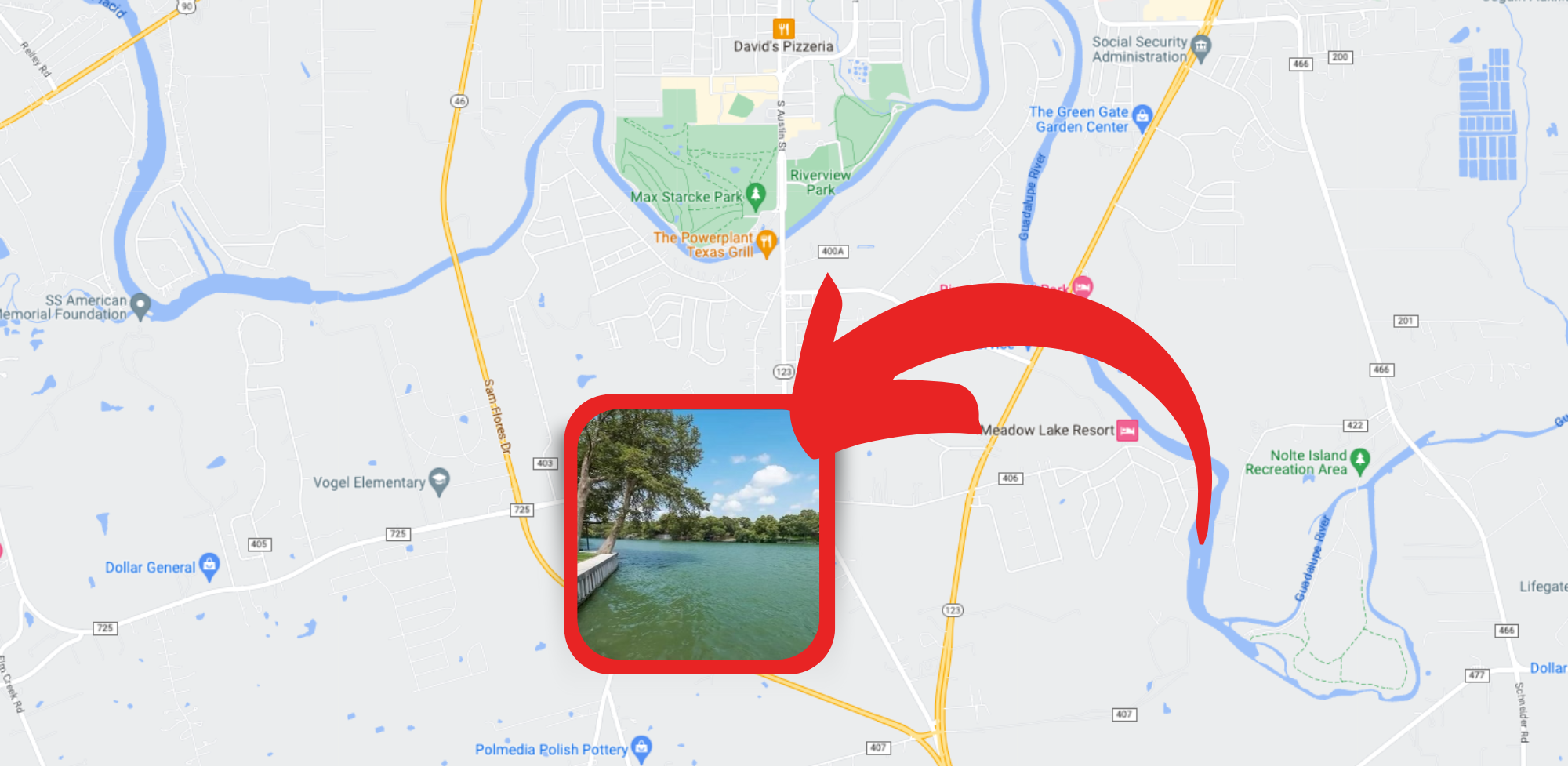
(Seguin) — The Seguin City Council is showing its support for the replacement of the Meadow Lake/Nolte Dam on the Guadalupe River.
The council on Tuesday agreed to provide $5 million to help support the project. Most of the project would be funded by homeowners along this stretch of the river. The Meadow Lake Water Control Improvement District (WCID) is expected to call for an election that would ask property owners on the lake to pay a tax that would cover the lion’s share of those expenses.
City Manager Steve Parker says unlike the repairs being done to the aging dams at lakes Dunlap, McQueeney and Placid upstream, there are far fewer houses on this portion of the river. That means those expenses would have to be spread among a smaller group of taxpayers on that lake. Parker says this is an important part of the city of Seguin, and it makes sense for the city to consider making this investment in the project.
“I think tonight is a very important discussion for us. We’ve been dealing with the Meadow Lake dam, and the six dams along the Guadalupe River. Each of them are in a different stage of project (development). Dunlap is almost near completion. Placid and McQueeney are just getting to the point of starting construction. Lake Wood and the other one near Gonzales — do not yet have a solution. But there’s been a group with the Meadow Lake neighborhood association that has been working very diligently to come up with a solution that they can afford. One of the struggles is that there are only 110 or so parcels on the river related to Meadow Lake. And so finding a solution that is cost effective and feasible for them has been the ultimate goal during this whole endeavor,” said Parker.
Parker says the city has been trying to be a part of a solution for the dam replacement project. He says it’s in the best interest of the community to see the lake protected and restored.
“We’ve been working very closely with GBRA, because they are the owner of that dam and they have a lot of say as to what happens and what the replacement is. But I think we’ve developed a very good relationship with them and have really mended a lot of fences in trying to find a solution. I think everybody understands that this is very important for the economy, for safety as well, and just the overall aesthetics of our community,” said Parker.
The city agreed to put up $5 million to help with the project. That money would be borrowed and not given out all at one time.
Parker says it’s a smart investment for the city to make when you consider what the city loses while the lake is drained. Parker says even with the pledged contribution from the city, it’s the homeowners on Meadow Lake that will pay for the bulk of this project.
“The majority of these costs should be borne by the people who live on Meadow Lake. So they’ve really tried to find a way to find an economic solution that works for everybody, and that’s safe and gets all the things (done) and makes the GBRA happy. This is something that would work for everybody. They actually created a water control Improvement district, which would give them the ability…to issue debt, go out for bids and actually assess the tax to their homeowners to pay for this solution. And that study is now complete as of late last week. It studied two real scenarios and the ultimate solution that’s being recommended to GBRA is an Obermeyer (spillway) gate (system), and that cost is ranging anywhere from $16 million to a high of $19.89 million. So we’re trying to find a way that that could be funded by a combination of different funds, (including) grant funds, city funds as well as WC ID funds,” said Parker.
Parker says the city’s investment in this project will pay some long-term dividends back to this community. The city of Seguin is also a major property owner on Meadowlake, with parts of it running through the city’s Max Starcke Park. He says this is being done with the community’s best interest in mind.
“If we’re going to lose property values because the lakes are down and the water is low, then what would be the economic impact related to that? And if you were to take that lost revenue and invest it into a solution, then that payment of the lost revenue would be used to then put into the dam solution. Once that payment is done, then the city is back to the same economic state it was to begin with, and there’s no true impact to the rest of the community to pay for this solution,” said Parker.
Several Meadow Lake residents spoke during Tuesday’s council meeting. Among them was Tess Coody-Anders. She is one of the Meadow Lake WCID directors. She is also the owner of Pecan Town Books and Brews in downtown Seguin. Coody-Anders spoke to the council about the importance of Meadow Lake. She says that it is not just important to the people that live on the lake, but it also impacts the entire community and it is a big part of Seguin’s future.
“Meadow Lake, as we’ve discussed, is a valuable economic asset and has the potential to help us further differentiate Seguin and attract new investment in our community from new homeowners and new businesses. The contributions of current and future residents to the city, to city, county and school tax revenues can’t be underestimated, and that goes away if the lake stays (drained). We can’t afford to lose a vital arrow in our quiver, particularly as we’re on the cusp of enacting a new comprehensive master plan, a strategic plan for economic development, and our master plan for downtown. Meadow Lake is an important component and asset in all of those plans, and again threads through all of them. Second, Meadow Lake is unique as a cultural and recreational asset that benefits not only our local residents, but it attracts visitors as well that are looking to stay and play on a lake at Starcke Park and on Nolte Island. And I can tell you that the money that these visitors spend with local businesses, like mine is, really vital,” said Coody-Anders.
The council unanimously agreed to pledge $5 million that would be used to help with the project once the work gets started.
Councilman Jason Biesenbach says not only does this help recover the lost tax revenue caused by the draining of the lake, but it represents an overall investment in what’s best for the city. Biesenbach says he doesn’t believe in big government, but he thinks this makes sense for Seguin.
“As a community, I feel that it’s our responsibility to invest in our own community and that’s exactly what they’re doing. They’re saying, we’re going to take the brunt of this — so could you help us in any way,” said Biesenbach.
The council considered offering more than the $5 million, but Parker says that might have required an increase in the tax rate, and he didn’t think that would be fair to ask the rest of the citizens to take on a tax increase to help cover this project.
The dam is part of the hydroelectric lakes that exist along the river in the Seguin, McQueeney, New Braunfels and Gonzales areas. The dams at Lakes Wood and Dunlap had already failed and the fear was the 90-plus year old dams were unsafe. That led GBRA to drain the lakes and began the process of lake residents working together to try to find a long-term solution to replacing the dams.